In America, there is a secret password. I have cracked it.
When two men pass each other, one will say: “Sup.”
This is not a question. It requires no answer.
The correct response to “Sup” is to say “Sup” back.
Two men. One word. Said twice. Nothing is exchanged. Both are satisfied.
I have seen it escalate.
“You good?”
“Yeah, you good?”
“Yeah.”
Three “goods.” Nobody asked anything. Nobody answered anything.
A complete conversation made entirely of reassurance about a problem that does not exist.
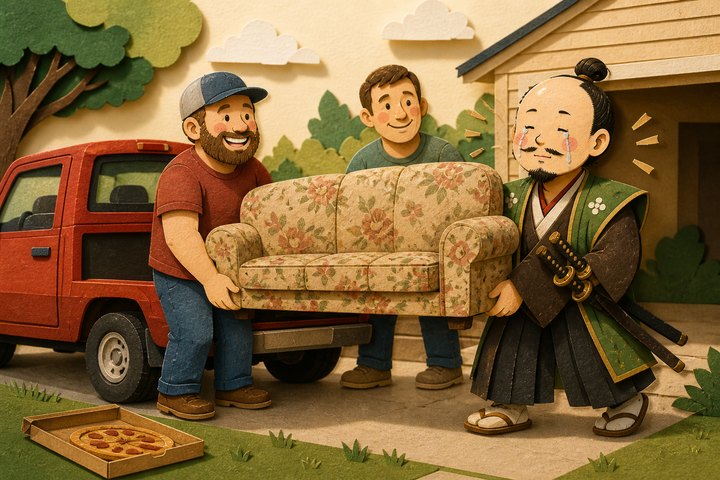
I tried to use it.
A man said “You good?” and I, panicking, said:
“Good. Are you good? I am also good. We are, I believe, both good.”
He stopped walking.
I had used four goods. The maximum is two.
By saying it correctly but too much, I had revealed I was a foreigner — like a spy who speaks the language flawlessly but bows when answering the telephone.
He looked at me for a long moment and said:
“…You good, man?”
And now there was REAL concern in it. The password had become a real question.
I had broken the system from the inside.
I have studied for months. I am now fluent.
“Sup.” (do not stop walking)
“You good?” “Yeah.” (do not stop walking)
Yesterday a man nodded at me from across the street and said nothing at all.
I nodded back, also saying nothing.
We had a full conversation. It went perfectly.
I have never said a single word to my closest American friend.
We are very close.
Cultural FAQs
What is "The Bewilderment" category?
Stories where ordinary American habits — greetings, orders, appliances — feel like puzzles to a visitor raised on different defaults.
Who is NOBUNAGA / @japan_nobunaga?
NOBUNAGA is an English-language comedy storytelling project: a wandering samurai observes modern American life. Stories also appear in the book The Samurai Who Discovered Free Chips.
Are these stories fiction or real travel notes?
They are literary comedy postcards rooted in recognizable American customs. Read them as storytelling, not as a guidebook, then check local norms when you travel.