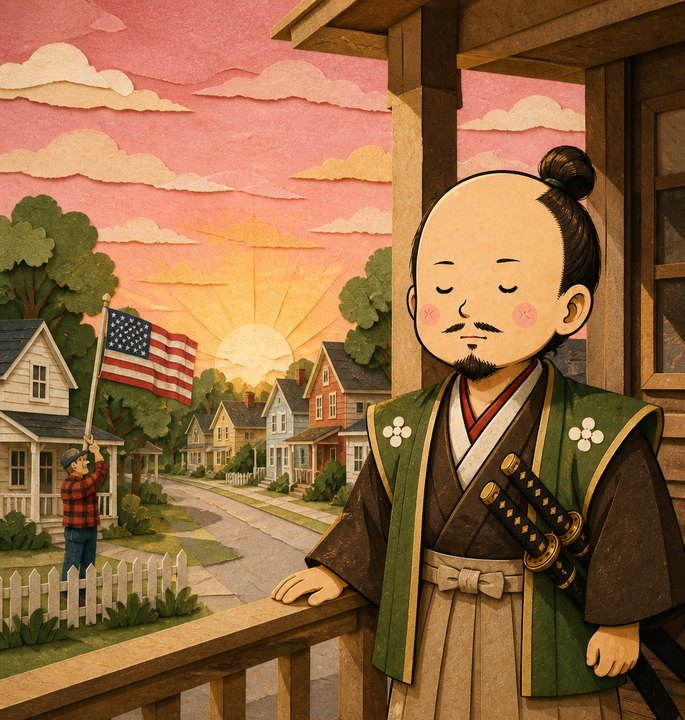
My American friends invited me to dinner. It was wonderful.
Then, at 9 o’clock, someone said the sacred words: “Well! We should get going.”
I rose. I gathered my coat. A clean farewell. We would part now.
We did not part now.
This was not a goodbye. This was the ANNOUNCEMENT of a goodbye.
A goodbye, I would learn, has many stages, and we had completed only the first.
For we then talked, standing, for twenty more minutes.
About a road. About the road they would take to drive home.
The conversation about leaving had become longer than the dinner.
We reached the door. “Okay! Goodnight!” Surely now.
No. At the door, a SECOND conversation began. A fresh one.
Someone remembered a story. We laughed. We were not leaving. We were thriving.
We moved to the porch. Stage three. The night air. New topics emerged.
The host, in his socks, in the cold, would not go back inside while a guest remained.
The guest would not get in the car while the host stood in the cold. A perfect deadlock of courtesy.
We reached the cars. Stage four. The driveway summit. The final boss.
Standing by the open car door, we discussed, in depth, plans to do this again —
the very event we were currently, allegedly, ending.
It was now 10:30. The “goodbye” was ninety minutes old. It had outlived the meal.
I understand it now. The long goodbye is not a failure to leave.
It is the meal’s dessert. The reluctance IS the affection, made visible and stretched as long as it will go.
So I have learned to honor it.
Last week I left a friend’s house.
The goodbye was so warm, so complete, so beautifully extended,
that we finished it standing in his driveway at midnight,
and I was so moved I invited him to MY house —
and he is here now. We are having dinner.
I can see, in his eyes, he is already thinking about the road home.
Cultural FAQs
Why do Americans rename strangers so quickly?
Nicknames and sports greetings signal belonging. Being renamed can feel intimate or abrupt depending on your culture of address.
Who is NOBUNAGA / @japan_nobunaga?
NOBUNAGA is an English-language comedy storytelling project: a wandering samurai observes modern American life. Stories also appear in the book The Samurai Who Discovered Free Chips.
Are these stories fiction or real travel notes?
They are literary comedy postcards rooted in recognizable American customs. Read them as storytelling, not as a guidebook, then check local norms when you travel.